Agile vs Waterfall: Choosing the Right Software Development Methodology
Your complete 2026 guide to selecting the methodology that drives project success
Choosing between Agile and Waterfall isn’t just picking a project management framework—it’s making a strategic decision that impacts your team’s productivity, product quality, timeline predictability, and ultimately, your project’s success. In 2026, with 86% of marketing organizations planning to transition to Agile methodologies and 39% of Agile-adopting organizations reporting higher performance rates, understanding which approach fits your specific situation has become essential.
Whether you’re launching a new software product, modernizing legacy systems, or managing complex enterprise projects, this comprehensive guide will help you navigate the Agile vs Waterfall decision with confidence, backed by real-world data and proven strategies from successful implementations.
Key Decision Point: In 2026, most successful organizations don’t choose “all Agile” or “all Waterfall”—they strategically apply each methodology where it delivers maximum value. This hybrid approach, often called “Wagile,” optimizes both flexibility and predictability.
What is Agile Methodology?
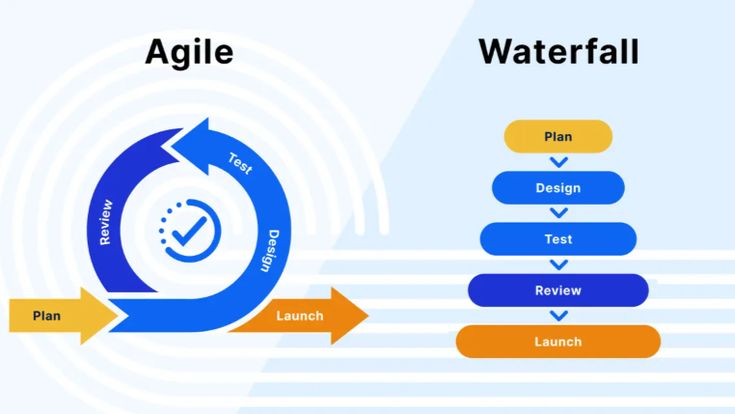
Agile is an iterative, flexible approach to software development that emphasizes continuous collaboration, rapid feedback, and adaptability to change. Instead of completing an entire project in one linear path, Agile breaks work into small, manageable cycles called “sprints”—typically lasting 1-4 weeks.
Core Principles of Agile
Formalized in 2001 with the Agile Manifesto, Agile prioritizes:
- Individuals and interactions over processes and tools
- Working software over comprehensive documentation
- Customer collaboration over contract negotiation
- Responding to change over following a rigid plan
How Agile Works in Practice
After each sprint, teams deliver a working piece of the product, gather stakeholder feedback, and adjust priorities for the next sprint. This continuous delivery model allows teams to:
- Respond quickly to changing requirements
- Deliver value incrementally rather than waiting months for a complete product
- Identify and fix issues early when they’re less expensive
- Maintain high team morale through visible progress
Agile Roles You’ll Encounter
Agile teams include specific roles that don’t exist in traditional project management:
- Product Owner: Prioritizes features and represents stakeholder interests
- Scrum Master: Facilitates Agile processes and removes team blockers
- Development Team: Cross-functional members who build the product
What is Waterfall Methodology?
Waterfall is a sequential, linear approach where each phase must be completed before moving to the next. Imagine water flowing down a waterfall—once it passes a level, it doesn’t flow back up. This methodology has been the foundation of project management since Dr. Winston W. Royce documented it in his 1970 paper.
The Waterfall Phases
Waterfall follows a clearly defined roadmap through these distinct stages:
- Requirements Gathering: Comprehensive documentation of all project needs upfront
- System Design: Architectural blueprints and technical specifications
- Implementation: Actual development of the software
- Testing: Verification that everything works as specified
- Deployment: Release to production environment
- Maintenance: Ongoing support and bug fixes
When Waterfall Shines
Waterfall excels in projects where:
- Requirements are crystal clear and stable from the start
- Regulatory compliance demands extensive documentation
- Budget and timeline predictability is non-negotiable
- The cost of making changes mid-project is extremely high
Agile vs Waterfall: Key Differences
🔄 Agile
Approach: Iterative cycles with continuous feedback and adaptation throughout development
Best For: Projects with evolving requirements, fast-paced markets, innovative products
💧 Waterfall
Approach: Sequential phases with comprehensive upfront planning and fixed scope
Best For: Well-defined projects, regulated industries, stable requirements
Side-by-Side Comparison
| Factor | Agile | Waterfall |
|---|---|---|
| Flexibility | ✓ Welcomes changes at any point | ✗ Changes are costly and difficult |
| Customer Involvement | ✓ Continuous feedback after each sprint | ✗ Mainly at start and end |
| Documentation | Minimal, just-in-time | Comprehensive upfront documentation |
| Timeline Predictability | Flexible, adjusts to priorities | ✓ Fixed timeline with milestones |
| Risk of Failure | Lower – early detection through sprints | Higher – issues found late in cycle |
| Team Structure | Cross-functional, self-organizing | Hierarchical with defined roles |
| Testing | Continuous throughout development | Separate phase after development |
| Budget | Variable, adjusts with scope | Fixed based on upfront estimates |
Agile: Advantages and Limitations
Agile Strengths
Rapid Response to Change
Agile teams can pivot quickly when market conditions shift, user needs evolve, or new opportunities emerge. This flexibility prevents you from investing months into features that become obsolete.
Faster Time to Value
Instead of waiting 6-12 months for a complete product, Agile delivers working software every few weeks. Users get value sooner, and you gather real-world feedback earlier.
Enhanced Collaboration
Daily standups, sprint reviews, and retrospectives promote transparency and shared ownership across teams. Problems surface quickly rather than festering.
Continuous Improvement
Regular retrospectives help teams refine processes, eliminate bottlenecks, and improve outcomes over time. Each sprint is an opportunity to work smarter.
Agile Challenges
Scope Creep Risk
Without strong prioritization and discipline, Agile projects can experience shifting timelines as new features continuously get added to the backlog.
Requires Cultural Change
Organizations accustomed to traditional processes, toolsets, and hierarchies often struggle with Agile’s collaborative, autonomous approach. This cultural shift demands executive buy-in.
Less Predictability
Stakeholders who need fixed budgets and firm delivery dates may find Agile’s flexibility uncomfortable, especially in regulated industries.
Waterfall: Advantages and Limitations
Waterfall Strengths
Clear Project Structure
Waterfall provides a well-defined roadmap with predictable milestones. Everyone knows exactly what happens when, reducing ambiguity.
Comprehensive Documentation
Detailed requirements and specifications support knowledge transfer, regulatory audits, and long-term maintenance. Critical for compliance-heavy industries.
Predictable Budgets and Timelines
Fixed scope and detailed upfront planning enable accurate cost estimation and schedule predictability—essential for enterprises with strict budget controls.
Best for Stable Requirements
When you know exactly what needs to be built and requirements won’t change, Waterfall’s linear approach eliminates unnecessary complexity.
Waterfall Challenges
Limited Flexibility
Once development begins, accommodating changes becomes expensive and time-consuming. Market shifts or user feedback often arrive too late to incorporate.
Delayed Feedback
Stakeholders don’t see working software until late in the project lifecycle. If something doesn’t meet expectations, significant rework may be required.
Higher Risk of Costly Rework
Issues discovered during the testing phase can require revisiting earlier phases, dramatically increasing costs and extending timelines.
How to Choose: Your Decision Framework
Critical Question: The methodology choice depends less on which approach is “better” and more on which aligns with your project’s risk profile, requirements stability, and organizational culture.
Choose Agile When:
Requirements Are Unclear or Expected to Evolve
If you’re building something new where user needs aren’t fully understood, Agile’s iterative approach lets you learn and adapt.
Example Scenarios:
- Launching a new consumer app in a competitive market
- Building innovative features based on emerging technologies
- Developing products where user behavior is uncertain
Fast Time-to-Market is Critical
When competitive pressure demands rapid delivery, Agile’s incremental releases get you to market faster than waiting for complete Waterfall cycles.
Customer Feedback Drives Success
Products that succeed through continuous user input benefit from Agile’s built-in feedback loops after each sprint.
Your Team is Cross-Functional and Self-Organizing
Agile works best with teams comfortable making decisions autonomously without waiting for hierarchical approvals.
Choose Waterfall When:
Requirements Are Crystal Clear and Stable
If you know exactly what needs to be built and changes are unlikely, Waterfall’s structured approach prevents unnecessary overhead.
Example Scenarios:
- Replacing a core billing system with known specifications
- Regulatory compliance projects with fixed requirements
- Infrastructure upgrades following established patterns
Regulatory Compliance Demands Extensive Documentation
Industries like healthcare (HIPAA), finance (SOX), or aerospace require comprehensive documentation that Waterfall naturally provides.
Fixed Budget and Timeline Are Non-Negotiable
Organizations with strict budgetary constraints and firm deadlines benefit from Waterfall’s predictability.
Dependencies Make Parallel Work Impossible
When each phase genuinely depends on completing the previous one, Waterfall’s sequential approach makes sense.
The Hybrid Approach: Best of Both Worlds
In 2026, rarely does an enterprise run on 100% Agile or 100% Waterfall. Most organizations operate a hybrid model, strategically applying each methodology where it delivers maximum value.
Common Hybrid Strategies
Bi-Modal Development
Use Waterfall for backend stability (quarterly releases) while running Agile for frontend features (bi-weekly releases). This approach balances innovation with reliability.
Waterfall Planning, Agile Execution
Establish upfront scope boundaries and dependencies using Waterfall, then execute delivery in Agile sprints where requirements can evolve within guardrails.
Phase Gates with Agile Increments
Use phase gates for funding decisions and risk checks (Waterfall), while Agile teams build and validate increments between gates.
Hybrid Success Example:
A financial services company might use Waterfall for their core banking platform (stability critical) while using Agile for their mobile banking app (user experience drives adoption). This hybrid strategy optimizes both security and innovation.
2026 Trend: QA teams increasingly manage bi-modal workflows—balancing quarterly backend stability requirements with bi-weekly frontend releases. Unified test management platforms help coordinate these parallel methodologies.
Industry-Specific Applications
Software Development
Agile Dominates: Most modern software teams use Agile (Scrum or Kanban) because requirements evolve as users interact with the product. Continuous deployment and user feedback are essential.
Construction Projects
Waterfall Primary, Agile Secondary: Structural work follows Waterfall (dependencies are fixed, rework is expensive), but Agile can manage coordination, interior finishes, and site surprises.
Government and Compliance
Hybrid Approach: Agile works for pilots and prototypes that validate stakeholder needs early, while Waterfall handles documentation and formal approval processes required for audits.
Marketing Campaigns
Increasingly Agile: With 86% of marketing organizations transitioning to Agile, campaigns benefit from rapid testing, feedback, and optimization impossible in traditional Waterfall planning.
Frequently Asked Questions
Yes, but it requires careful planning. The transition is easier if you’re between phases rather than mid-implementation. Start by introducing Agile practices gradually:
- Break remaining work into sprints
- Implement daily standups and sprint reviews
- Prioritize the backlog with stakeholders
- Begin delivering incremental value
However, expect cultural adjustment challenges. Teams accustomed to Waterfall may need training and time to embrace Agile’s collaborative, autonomous approach.
It depends on your project characteristics. Agile may appear more expensive initially due to ongoing collaboration and frequent iterations, but often reduces long-term costs by identifying issues early and delivering value incrementally.
Waterfall involves fixed upfront costs and detailed planning, but late-stage changes can lead to costly rework. Research shows that defects discovered in Waterfall’s testing phase cost exponentially more to fix than issues caught early in Agile sprints.
For projects with stable requirements and low change risk, Waterfall can be more cost-effective. For innovative products or evolving requirements, Agile typically delivers better ROI.
Most Agile teams use 2-week sprints as the sweet spot, though sprint duration can range from 1-4 weeks. Two-week sprints provide:
- Frequent feedback without excessive meeting overhead
- Enough time to deliver meaningful features
- Regular opportunities to adjust priorities
- Sustainable team velocity tracking
Teams working on urgent fixes might use 1-week sprints, while those with complex features might extend to 3-4 weeks. The key is consistency—choose a duration and stick with it for predictable planning.
Agile requires just-in-time documentation rather than comprehensive upfront documentation. The Agile Manifesto values “working software over comprehensive documentation”—not no documentation, but appropriate documentation.
Agile teams document:
- User stories and acceptance criteria
- Sprint goals and retrospective notes
- Technical decisions and architecture
- API documentation and release notes
What Agile eliminates is extensive upfront specifications that become outdated as requirements evolve. For regulated industries requiring comprehensive audit trails, hybrid approaches can maintain necessary documentation while preserving Agile flexibility.
Absolutely! Agile actually works exceptionally well for small teams of 3-9 members. Small teams can:
- Make decisions faster without bureaucracy
- Communicate more effectively (fewer coordination challenges)
- Adapt quickly to changing priorities
- Maintain high accountability with fewer people
Many successful startups use lightweight Agile practices like Kanban boards, weekly planning sessions, and daily standups without the full Scrum ceremony. The key is adapting Agile principles to your team size rather than rigidly following frameworks designed for larger organizations.
Research consistently shows Agile projects have higher success rates:
- 39% of organizations using Agile report higher performance rates
- Agile projects are 28% more successful than traditional approaches
- Agile reduces project failure risk by detecting issues early through continuous testing
However, context matters. Waterfall succeeds in well-defined, stable environments where its structure prevents scope creep. Agile excels in dynamic environments where adaptability drives success.
The real differentiator isn’t the methodology itself—it’s choosing the approach that matches your project characteristics, team capabilities, and organizational culture.
Executives care about business outcomes, not methodologies. Frame your Agile proposal around:
- Faster time-to-market: Deliver features in weeks instead of months
- Risk reduction: Early issue detection prevents costly late-stage rework
- Competitive advantage: Respond to market changes while competitors are locked into rigid plans
- Higher team satisfaction: Improved morale reduces turnover costs
Start with a pilot project in a low-risk area. Demonstrate measurable results (velocity, quality metrics, customer satisfaction) before proposing organization-wide adoption. Success stories speak louder than methodology evangelism.